Tips on How and Why to Use Social Security Website
The tool you may not realize you need
(Initially published on Medium.com, 03-Dec-2025)
Many Americans rely on Social Security as a substantial part of their retirement finances. Yet, they do not log into their SSA account regularly, or even before they begin claiming benefits.
Here are some tips and tools you should consider once you start working. Starting these habits with your first job is helpful and they become more important as you approach your retirement.
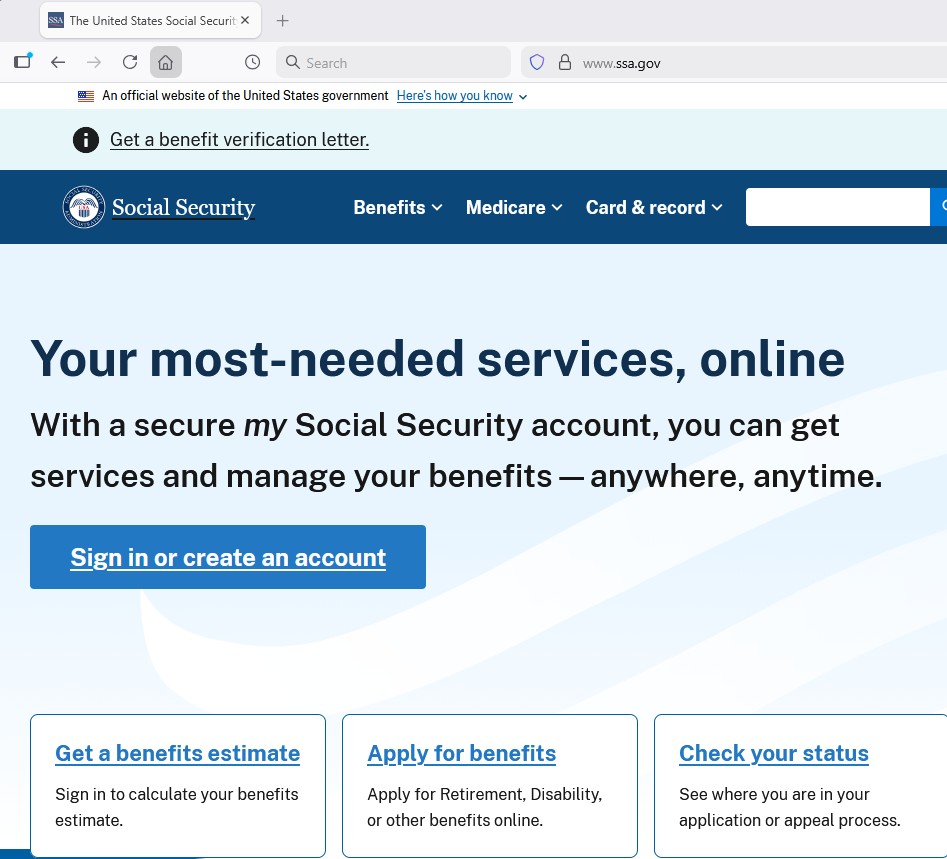
The Social Security Website
The Social Security Administration (SSA) website has evolved over time with more features.
If you are working and paying into Social Security, then you should ensure your earnings are being recorded correctly — regardless of your age.
Get Access to Your Data
Step 1 is to create your SSA login, so you have access to your information.
Remember that this is the data that will determine your Social Security benefits in the future.
Don’t assume the data is correct. Mistakes can be made. If you find an error, report it to the SSA as soon as possible, using the instructions on their website.
Having access to your earnings history, benefits forecast, statements and planning tools is essential for financial planning.
When & How Often To Check the SSA Website
The SSA website is a useful tool that you should check periodically.
As a minimum, I log in to check my data every year — typically, this is after my tax return has been processed. Checking after your tax return is processed is a great strategy to ensure your last year’s earnings were properly recorded.
While working, even from my 20s and into my 50s, Social Security wasn’t something my wife and I regularly discussed.
As my wife and I edge closer to age 60, our forecast Social Security benefits are on our minds and in our retirement planning spreadsheets.
Website Key Features & Functions
Key elements of the website include:
- Tools for SSA messages and keeping your profile updated
- Your Social Security Statement
- Replacing your Social Security Card
- Getting a Benefits Verification Letter
- Portal to Upload Documents
- Eligibility and Earnings Status
- Retirement Calculator
- Initiating Benefits
- Information on application to Medicare
Review Your Social Security Statement
Your Social Security statement has several key pieces of information to review.
Benefits Status
Your statement will state if you have earned enough credits to receive:
- Retirement benefits
- Disability benefits
- Survivors benefits for your family
- Medicare
Confirming your work history and contribution history is crucial to ensure your records are accurate for benefits eligibility.
Earnings Record
Your statement includes a table of work years and list your earnings taxed for Social Security and Medicare. This information is listed per year for the most recent 20 years or so.
Earlier years are combined into totals for each decade — at least that’s how mine show up. This is an important reason to verify your data each year. I imagine it will be difficult to confirm your data from 30 years ago, if it is summed up as a decade worth of earnings.
Forecast Monthly Benefits
Retirement Benefits
Your statement includes a graph with your personalized monthly retirement benefit estimate, based on your age to start claiming benefits (from ages 62 to 70 years old).
These estimates assume that you continue working and earn a similar wage until claiming benefits. Those are important assumptions.
While this is useful information if you plan to continue to work until claiming benefits, I don’t find it useful because I have stopped working.
Using the Retirement Calculator tool is more useful to folks like me who stop working years before claiming benefits.
Disability Benefits
Your statement includes a statement of your earned disability benefit. I assume this is a current as-earned benefit since disability can’t be forecast.
Survivors Benefits
Your statement includes a statement of your eligible family members benefit in the event of your death. Similar to disability, I assume this is a current as-earned benefit since death can’t be forecast.
Retirement Ready Fact Sheet
As I’m in my 50s, my statement includes a ‘Fact Sheet For Workers Ages 49–60’ with several helpful guidance notes and references.
It covers many of the topics above and highlights a few items about your benefits and considerations when making your plans.
SSA Website Retirement Calculator
Understanding Your Forecast Benefits
The online tool provides estimates for your future Social Security retirement benefits based on various inputs you can change.
As mentioned above, the statement forecast is based on working until you claim benefits and having similar earnings as your current year.
The Retirement Calculator will help you understand how your benefit is impacted if you
- Stop working but will claim benefits later
- Have reduced wages in the future
The online tool enables you to estimate these scenarios so you have the data to understand how the changes affect your Social Security benefits.
Scenarios to Consider
You already have the baseline benefit estimate based on your earnings history and assumption on your earnings and various retirement ages.
That’s going to likely give your max earnings, assuming you don’t have notable earnings changes in the future.
I recommend you use the Retirement Calculator to understand your benefits forecast for a few different scenarios.
Earnings are provided in chart format with various retirement ages, so you can view your earnings forecast by adjusting your retirement age, average future annual salary and comparison to spouse benefits.
The scenarios below will help ‘bookend’ the estimates by estimating your minimum benefits earned and the potential maximum.
Given the results are presented already with data for ages 62, 67 (full retirement age, FRA) and 70 (delayed), I recommend adding age 65 as another data point — or age you choose for planning. You can change the age to years-month values; you don’t need to select a single age in years.
Scenario #1: No future earnings
By selecting $0 for average future earnings, the calculator will show you estimates for your retirement benefits based on your work history earnings and with no additional contributions. Having this information for different benefit claiming ages is very useful information.
This is the estimated minimum earnings per month you will receive, based on the age you choose to claim benefits.
Scenario #2: Increased average future earnings
If you are younger in your career or expecting a notably higher salary where you have not already been contributing the maximum social security contribution per year, then add that amount to estimate what your future earnings can be in that scenario. It will give you an estimate of your estimated potential maximum monthly benefit.
Note: With any scenario you create, you can change the benefits claim age to see the specific estimate for a unique age of interest to you for planning purposes.
Takeaways
Here are some tips and recommendations to be informed and intentional about your Social Security benefits.
- If you don’t already have a SSA account, create one. You need access to your data. You should set this up now, regardless of your age or career stage.
- Login to SSA regularly and check your earnings data for accuracy — I recommend checking after your tax return is processed to ensure latest earnings are recorded correctly. This is a minimum frequency. Contact SSA as soon as possible to correct any errors.
- Work sufficient time to ensure you have at least 40 quarters (10 years) of earnings to qualify for benefits.
- Keep track of your maximum earning years — your benefits are based on your highest 35 years of earnings.
- Use the SSA website Retirement Calculator tool to estimate your future benefits. Run various scenarios — life happens and circumstances change. Consider your potential worst- and best-case scenarios.
- Keep in mind that the forecast benefits are based on today’s dollars. Your actual future benefit will be based on the cumulative Cost of Living Adjustments (COLA) applied in the years between now and when you claim your benefits. This helps you relate the benefit in terms of today’s cost of living.
- Consider your risk tolerance to Social Security’s ability to payout future benefits as calculated. I discount my estimates by 40% to be conservative in my planning.
- When you claim benefits is unique to each person’s circumstances (financial and often personal health), consider your long term plans, needs and resources when selecting your timing to claim benefits.
And, lastly:
Be informed and intentional in your finances. You can’t plan and manage what you don’t know.
Enjoy Life and Thanks for Reading,
-Jeff
Disclaimer
This article is intended for informational purposes only and should not be considered financial, investment, business, tax, or legal advice. You should consult a relevant professional before making any major decisions.