
Retirement Anxiety: 12 Financial Anxiety Drivers for People in Their 50s and 60s
Stress of managing your money as you approach retirement
(Initially published on Medium.com, 30-Dec-2025)
Are you in your 50s or 60s?
How do you feel about your financial readiness for retirement? Are you feeling confident, overwhelmed, or anxious?
When I retired from my engineering career at the end of 2023, I worked through our budget for the upcoming few years to understand our cash flow. I used the assumption that I wasn’t returning to work and my wife would retire in a few years.
Planning with your partner is crucial — that can’t be emphasized enough.
Start planning early — even if it’s without total clarity of what your retirement lifestyle will be. Just start!
Your younger years — the 20’s through 40’s
Plans are simple when you are younger and working. You’re in the ‘Earn & Save’ mode; you focus on saving what you can.
If you’re like me, you looked at the various rules of thumb for how much you should have saved (multiples of your salary), how much you should withdraw (4% rule), or how much you’ll spend (e.g., 80% of your pre-retirement expenses).
Those rules of thumb are notional at best.
As you approach retirement age, I recommend that you don’t use them; they might work for you. If they do work for you, then you got lucky.
The better plan is based on you doing the math for your lifestyle, expenses, and assets.
The “Jones comparisons” and generic trends are no longer relevant — they never were. Plans for YOUR retirement must be based on YOU.
Into your 50s & 60s
When you approach retirement, it’s no longer practice, it’s game day — the real deal.
Transitioning from ‘Earn & Save’ mode to ‘Manage & Spend’ mode is a tough change to make. Your perspective is completely different.
Once you stop working, the anxiety of managing the nest egg is real. You don’t want to undermine your retirement plans — whatever they may be.
Understanding the typical concerns is an important step to planning for your retirement.
What Are The Most Common Concerns Creating Financial Anxiety?
Since retiring, I wanted to write an article related to the concerns folks may have as they approach retirement. I knew my concerns, but wanted more info.
None of my friends are retired, so I asked ChatGPT.
Using ChatGPT for research is a new strategy for me, and I’d rather be transparent about what I received and what I’m sharing. You can see what ChatGPT provided and the commentary perspective I am adding.
Author Note: I’m sharing the prompt and query results as-is, but my commentary uses the quote format, like this sentence.
When I read ChatGPT’s response with twelve answers, being an engineer, my thought process was ‘Okay, how do folks mitigate the concern? Let’s move beyond anxiety and panic.’
So I added my commentary on assessing, de-risking strategies, and overall perspective. For me, step 1 is to define the problem so you can address possible solutions.
My Question to ChatGPT:
“What are the most common concerns that create financial anxiety as folks in the 50’s and 60’s approach retirement?”
ChatGPT’s Response: (with 12 points)
Top Financial Anxiety Drivers for People in Their 50s and 60s
Here are the most common concerns that create financial anxiety for people in their 50s and 60s as they approach retirement. These worries show up consistently in surveys from AARP, Fidelity, Vanguard, and the Employee Benefit Research Institute — and they reflect both emotional and practical fears.
1. “Will I outlive my money?” (Longevity risk)
People are living longer, but most retirement planning hasn’t kept up.
The fear of running out of money too soon is by far the #1 anxiety.
Drivers:
- Unsure how long savings need to last
- Rising prices, inflation
- Unpredictable investment returns
Author thoughts & commentary:
I don’t agree with the ChatGPT response stating ‘but most retirement planning hasn’t kept up.’ What does that even mean, ‘hasn’t kept up’? It sounds like an emotive response.
If folks are concerned about outliving their money, then the most probable root causes relate to (1) expenses in retirement, (2) assets available, and (3) a plan that pulls them together.
In the end, the solution is about making your detailed budget, forecasting your expenses and income. If that seems too hard, then consider how hard it will be to run out of money because you didn’t plan. Do your math and know your options.
You may not like the answer, but quantifying the problem can help you know your situation, instead of just saying you’re worried about running out of money.
Action: Make a real plan, based on your circumstances (estimated lifespan, expenses, and income). Ensure your basecase is a sustainable plan. Monitor the plan while living it; adjust (as you are able and) as needed.
And, I hope your plan helps you live the retired lifestyle you desire.
Don’t forget to be honest with yourself if you don’t like the answers and forecast when you make your plan. Your lifestyle plan may need to be downsized to fit your financial reality.
2. Rising Healthcare Costs — Especially Long-Term Care
Healthcare is one of the biggest unknown costs in retirement.
Common worries:
- Medicare premiums and out-of-pocket costs
- Long-term care (LTC) expenses — easily $60k–$120k/yr
- Unexpected medical events wiping out savings
Author thoughts & commentary:
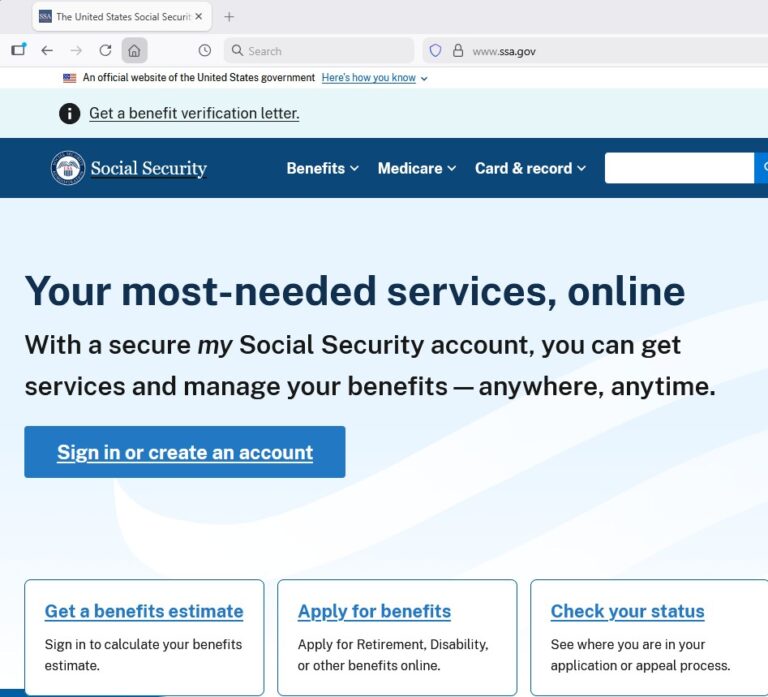
This is an interesting one. I must admit that, as recently as a few years ago, I wasn’t aware that you pay for Medicare. Naively, I assumed it was free as part of our Social Security contributions. There’s a sliding scale of charges based on your income (go look up “Income-Related Monthly Adjustment Amount “ (IRMAA) to learn more).
The ChatGPT response noting healthcare as the biggest unknown is valid. So many folks don’t know these details. You will likely have monthly Medicare charges and probably another monthly charge for the supplemental insurance to help bridge the gaps and cover what Medicare doesn’t pay for.
Action: As part of your financial plan and quantifying your income, do your homework and determine the Medicare and supplemental insurance costs you’ll incur during retirement. Understand and quantify those costs and put them in your plan.
KEY REMINDER: Medicare costs are ‘per person’, not per couple, so make sure you include both you and your spouse if you’re married.
If you are younger than 65 years old and retiring, you likely need to find health insurance to bridge the gap to age 65. This will be expensive, depending on the plan you select. This may be your largest expense until you reach age 65. Look at the various options available and consider which plan is right for you.
Regarding long-term care expenses and unexpected medical expenses, my best suggestion is to allocate part of your nest egg to pay for those items by adding them as potential expenses — create a sunk fund account if you’re able to have funds allocated. In either case, an option could be to sell some assets to get cash, but that is likely a short-term solution that may put you in a worse situation long-term.
3. Uncertainty About When to Claim Social Security
Many people worry about:
- Claiming too early and reducing lifetime benefits
- Claiming too late and draining savings in the meantime
- Confusing rules around spousal, survivor, and delayed credits
This creates anxiety because Social Security is the foundation of retirement income for most Americans.
Author thoughts & commentary:
When to claim Social Security has been beaten to death in different articles. Consider some important questions relating to your specific circumstances, such as:
[1] Do you need the money to live on as soon as 62 or before full retirement age (FRA)? If so, you may not have a choice but to take a reduced benefit.
[2] If you don’t need the money to live on, congrats. What’s your strategy?
(A) Take it early and invest it.
(B) Delay if you prefer to wait to have a larger benefit later
(C) Are you in ill health where you don’t believe you’ll live long enough to make it worthwhile waiting, so take the money now and spend it.
(D) Are there spousal or survival considerations to factor in?
Whatever your circumstances, outline the detailed results for various scenarios and figure out which is best for you. Consult your financial planner, tax planner, or other trusted advisors to do the math specific to your circumstances.
Some folks get caught up in trying to maximize their benefit; maybe that is the right thing to do, but there is also the risk that the program benefits may change if funding is not sufficient to pay full benefits. This risk and the other considerations above all contribute to your decision process.
Action: Review your financial plan and determine your drivers for Social Security and the appropriate timing given your circumstances. Discuss with your financial advisor and tax accountant. This is a major decision, so do your homework.
4. Market Volatility Impacting Investments
After age 50, people tend to be more risk-aware — and volatility can feel more threatening.
Specific fears:
- A recession reducing their retirement balance
- Sequence-of-returns risk (bad years early in retirement)
- Not knowing how much risk to take
Author thoughts & commentary:
Market volatility risk is at the forefront of my mind these days. Being mid-50s, a market correction could be a disaster in my financial planning if I weren’t planning.
However, my wife and I decided to keep several years’ worth of expenses in money market accounts, bonds, and certificates of deposit (CD’s) to have cash available to ride out market corrections. Hopefully, we won’t need to sell assets during a downturn, but this is something we will manage year-to-year.
Consider allocating some funds in various investments that mature in a ladder fashion so that you can reinvest as they mature if the funds are not needed, but you are maintaining a periodic interval of maturity to gain access if required.
Plan with consideration of near-term and long-term, and identify the timeline of when various funds may be needed. Rebalance those fund allocations annually to maintain a risk profile you accept.
ACTION: Have your financial plan and determine your risk tolerance for market volatility and how you plan to pay your expenses over a multi-year period to avoid being forced to sell in a down market.
5. Inflation Eroding Purchasing Power
Inflation becomes a top concern in the 50s because retirement can last 20–30+ years.
People worry about:
- Day-to-day expenses rising faster than income
- Fixed-income investments not keeping pace
- Healthcare inflation outpacing everything
Author thoughts & commentary:
Inflation is a tough one. Long-term average inflation rates are an interesting data point, but they don’t predict the future.
Maintaining some long-term assets in growth asset classes is a way to hedge against inflation. Having growth that exceeds inflation helps maintain the purchasing power of your nest egg. Ensure you are not keeping too much cash and losing buying power due to inflation.
I haven’t personally investigated annuities, but I understand there are some that can be inflation-adjusted. That seems a prudent consideration when looking at fixed-income investments.
Healthcare cost increases are known to increase at rates faster than inflation. On that front, I think there’s a bigger strategy to consider if you’re able:
[1] Focus on maintaining and improving your health to hopefully reduce your risks for medical treatments and costs. Improved health is the ounce of prevention that can avoid the need for a pound of cure. Improved health can directly reduce your healthcare expenses (think medication, doctor visits, physical therapy, etc.).
[2] Recognize your current ailments and any conditions you may be genetically inclined to get, to understand a potential health profile and costs. Do what you can to minimize your risks.
[3] After the two items above, as you’re able, ensure your plans have provisions to account for the potential increased healthcare costs and consider these costs when selecting any supplemental insurance coverage you want to assist with costs Medicare doesn’t cover.
6. Mortgage or Debt Still Not Paid Off
Many people now reach their 50s with:
- A mortgage
- Student loans from helping kids
- Credit card debt
- Car loans
The anxiety comes from “bringing debt into retirement,” something prior generations avoided.
Author thoughts & commentary:
Debt is not necessarily a bad thing. There’s been plenty of articles written about that.
The main action regarding debt is to ensure repayment is covered in your retirement plan until it’s paid off.
If you have debt, include it in the plan.
Work on reducing debts (especially all non-mortgage debt) before retirement. Refinance strategically, if you are able, to consolidate debts (and eliminate/avoid the loans or credit cards that got you in that position).
Prioritize paying off higher-interest-rate debts over lower-interest-rate ones. Address that with consideration for debt balances and the number of debts — do the math to determine if it’s better to pay off a small debt first to refocus that debt’s minimum payment as an addition to a higher-interest debt.
If you have debt problems, speak with financial advisors and debt counselors to outline an achievable debt repayment plan. Any less is just lying to yourself.
If your retirement plan can’t support your debt payments, you aren’t ready to retire and should consider extending your working years or selling other assets, if possible.
I understand some folks have circumstances out of their control regarding when and on what terms they leave work, where they are put into a financial hardship position. If you are in this situation, I’m sorry to hear that. In those instances, please seek out the experts to get a plan put together so you are not forced into a worse financial position by compounding financial problems.
7. Unclear Retirement Income Plan
People often have savings — but not a plan that converts savings into reliable monthly income.
Typical worries:
- “How much can I safely withdraw?”
- “How do I create a paycheck from my savings?”
- “Should I use an annuity? Dividend stocks? Bonds?”
Without a strategy, savings feel fragile.
Author thoughts & commentary:
This is one of my main financial concerns. It’s a big shift from ‘Earn & Save’ to ‘Retire & Spend’. All the theoretical models for average returns and income streams don’t mean squat if the investments you chose don’t meet those.
Creating the retirement income plan and understanding the potential variation and associated risks is a huge task.
For those relying on Social Security or a pension scheme, the terms of income are usually well defined.
Oddly enough, this risk is heightened for those with assets to manage. They must select the investment types when it’s time to sell to get cash.
Having an income plan that addresses near-term years and longer-term assets will help manage your money.
Build your retirement income ‘paycheck’ from your various income sources: Social Security, pensions, investment dividends and interest, investment sales, other income sources (e.g., rental properties, etc.), and part-time income if applicable.
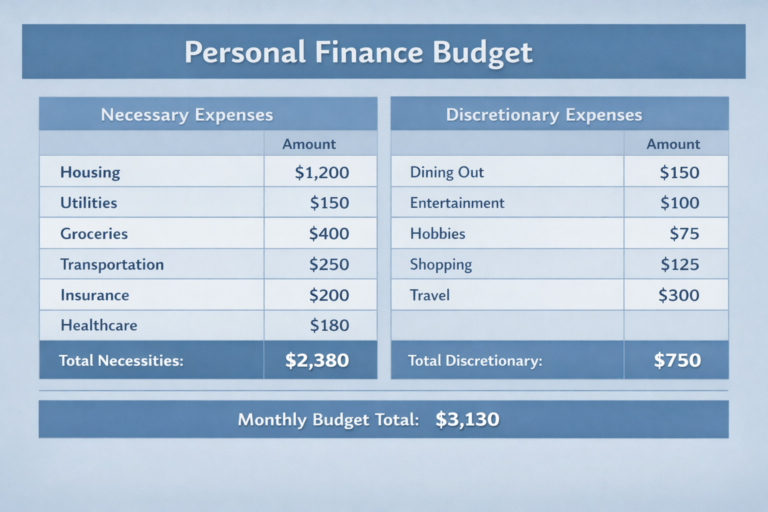
For me, fundamentally, the first number to calculate is your annual expenses and compare them to your annual income. With these two figures, you can determine what compromises are needed so that expenses are covered, by either reducing expenses, increasing income, or asset sales, and recognizing it may require a bit of all these actions. With that information and consideration of future years, you can forecast how long your money can last in retirement.
8. Supporting Adult Children or Aging Parents
The “sandwich generation” concern.
Financial stressors include:
- Helping adult kids financially
- Paying for caregiving for elderly parents
- Unexpected medical or emergency costs
This can dramatically reduce retirement readiness.
Author thoughts & commentary:
To address the anxiety or concerns about family support, I think the best course is to have open, honest discussions with them to understand potential scenarios and identify how much you can help.
This is a tough one. Family is a priority for me. I agree with supporting family as you are able, but there also need to be boundaries to not sabotage your own security. Finding a balance is recommended — and, no, I don’t know what that answer looks like. That’s for each family to do what’s best for them.
9. Uncertainty About When They Can Stop Working
People fear:
- Being forced into early retirement due to layoffs or health
- Not having enough saved by their target age
- Needing part-time work far longer than expected
Many feel they’re “behind” even if they’re not as far behind as they think.
Author thoughts & commentary:
My first thoughts and response to the above come back to my comments on the first concern: Make a retirement plan based on your circumstances.
Don’t ask high-level general questions or apply one of the financial magazine’s rules of thumb — now is not the time to just calculate a 4% withdrawal per year!
Quantify your financial situation and assess it.
Model your retirement plan options with different ages, risk profiles, market corrections, etc., to understand how robust your retirement plan may be. Consult with your financial advisors — many can help you with this assessment.
10. Not Understanding What Retirement Will Actually Cost
This is a broad, nagging worry.
Concerns include:
- Underestimating living expenses
- Losing work benefits (healthcare, life insurance, etc.)
- Not knowing what lifestyle they can afford
The unknowns create anxiety even when savings are adequate.
Author thoughts & commentary:
Again, this one comes down to having a retirement plan. You can’t and won’t know every expense for your retirement years, but by taking the time to research and consider various expenses options, you can gain insight into your potential expense profile.
From that, you can evaluate how you choose to de-risk these expenses or have preliminary plans on how you would address them.
The noted concern of ‘not knowing what lifestyle they can afford’ is not an expense issue, it’s an income issue. Again, by working through a retirement plan that quantifies your forecast income, you can determine what you can afford — and I suggest you allocate part of that income to a ‘contingency’ bucket for the unknowns that can occur.
11. Taxes in Retirement
People often underestimate:
- Required minimum distributions (RMDs)
- Taxes on Social Security
- Taxes on investment withdrawals
- Changes in tax laws
Lack of clarity = stress.
Author thoughts & commentary:
Oh my, I’m going to sound like a broken record. Make your plan!
Do the research on RMDs, taxes on Social Security, and investments. That’s the best you can do right now. Stop stressing and get clarity.
If you have concerns about changes in tax laws, articulate those concerns to your financial advisor and tax accountant so they can advise you.
If that doesn’t address your concerns about future changes, I suggest you hedge your income or expense profiles with contingency assumptions to the extent you feel necessary to address this concern.
12. Estate Planning Issues
Common anxiety comes from:
- Not having a will
- Not having powers of attorney
- Not wanting to be a burden on family
- Concern about leaving something behind
Author thoughts & commentary:
There are plenty of articles addressing estate planning. The first two bullets are easy to address:
[1] Make a will
[2] Get Powers of Attorney in place
Communicate your intentions to your family as you deem appropriate. As a named executor in a family member’s will, my instruction was simple: “Ensure the heirs know what decisions you made and explain it to them now — it’s not my job to explain it when you’re gone, and they are dealing with grief.”
Regarding concerns about being a burden, plan as you are able to fund your own support care. If that’s not possible, communicate and discuss now, before there is an immediate need. This is a tough one as each family will be different on resources, family bonds, and financial/time resources to support someone.
Roadmap to Reduce Retirement Anxiety
Before you get closer to changing your title & status on LinkedIn to “Retired and Loving Every Minute of it!”, change your perspective from
“I hope we will be okay.”
to
“I know what our plan is.”
The roadmap
You can reduce your anxiety by working on your plan:
- Inventory your financial accounts and maintain periodic balance check-ins.
- Clarify your lifestyle costs and forecast for future years.
- Create a Social Security timing plan.
- Define your investment strategy.
- Build a retirement income plan.
- Address healthcare and long-term care.
- Build a tax strategy.
- Keep your estate planning documents updated.
- Review once a year (minimum).
Some clarity can create calm and reduce anxiety. Panic rarely helps. Take the time to make a plan that’s applicable to your circumstances.
You may not like the initial results, but through review and revision, you can hopefully find a balance.
Do your homework and make decisions that are right for you and your family.
Parting thoughts and considerations:
- Your plan will change over time.
- Adjust your plan as your lifestyle changes.
- Don’t forget to account for the various stages of retirement: ‘go-go years’, ‘slow-go years’, and ‘no-go years’. Your life will evolve, and so will your plan.
- Be honest about your financials; otherwise, your plan might as well include an item that says, “Win the Powerball lottery.”.
- Find daily joy with your family and friends. That will be real retirement joy.
I hope this article help you collect your thoughts and reflect on potential financial anxieties you may experience.
Being informed and prepared will help you manage your finances with control rather than anxiety. Panic rarely helps. Money clarity is honesty you’ll appreciate.
Enjoy Life and Thanks for Reading,
-Jeff
Disclaimer
This article is intended for informational and discussion purposes only and should not be considered financial, investment, business, tax, or legal advice. You should consult a relevant professional before making any major decisions. The information in this article may not be applicable to your specific financial circumstances. Make your retirement plan and review it with your advisors.