You Heard No Tax on Overtime. Here’s What That Actually Means.
A plain English breakdown of what the overtime deduction actually covers, what it does not, and why misunderstanding it could cost you money at tax time.
(Initially published on Medium.com, 20-May-2026)
It’s amazing how the news headlines and sound bites can be misrepresented and misinterpreted by the folks who need clarity the most.
A recent example for me is how overtime pay is taxed under the ‘One, Big, Beautiful Bill” that was signed into law earlier this year.
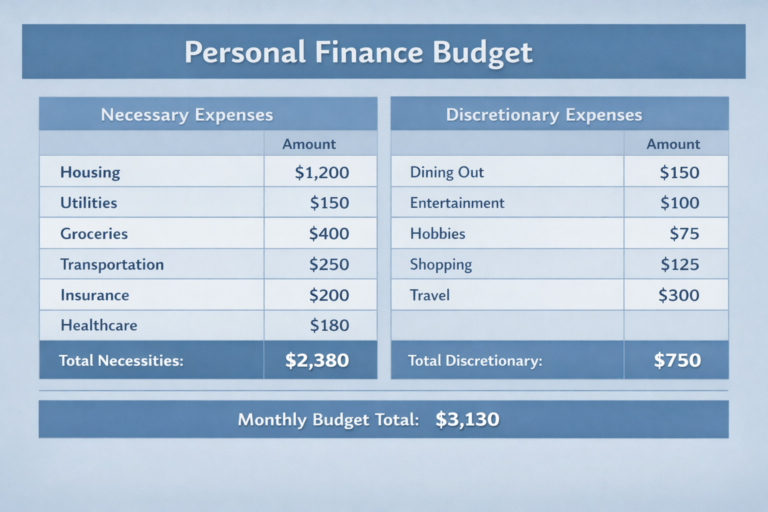
I recently visited with my 26 year old nephew to help him with his 401k forms and it turned into a personal budget prep session for him. I wrote about that here. It’s worth a read and some context for this article.
To some degree, I lost touch with the challenges of starting out in your 20s. I’m knocking on the door of 60, so it’s been a few years. One surprise was his response when I mentioned paying taxes on his overtime pay,
“Nope! Trump got rid of that. I don’t pay any taxes on overtime. It was in the ‘Big Beautiful Bill’.”
I recalled hearing about overtime and tips receiving special tax treatment, so I accepted it and we moved on. In hindsight, that was a mistake. The devil is in the detail.
One Big Beautiful Bill — Overtime Summary
I’m not a tax accountant, so take this as an overview, but it’s enough to know the highlights.
The devil is in the detail.
It isn’t All Overtime Pay
The overtime tax break doesn’t apply to your entire overtime paycheck.
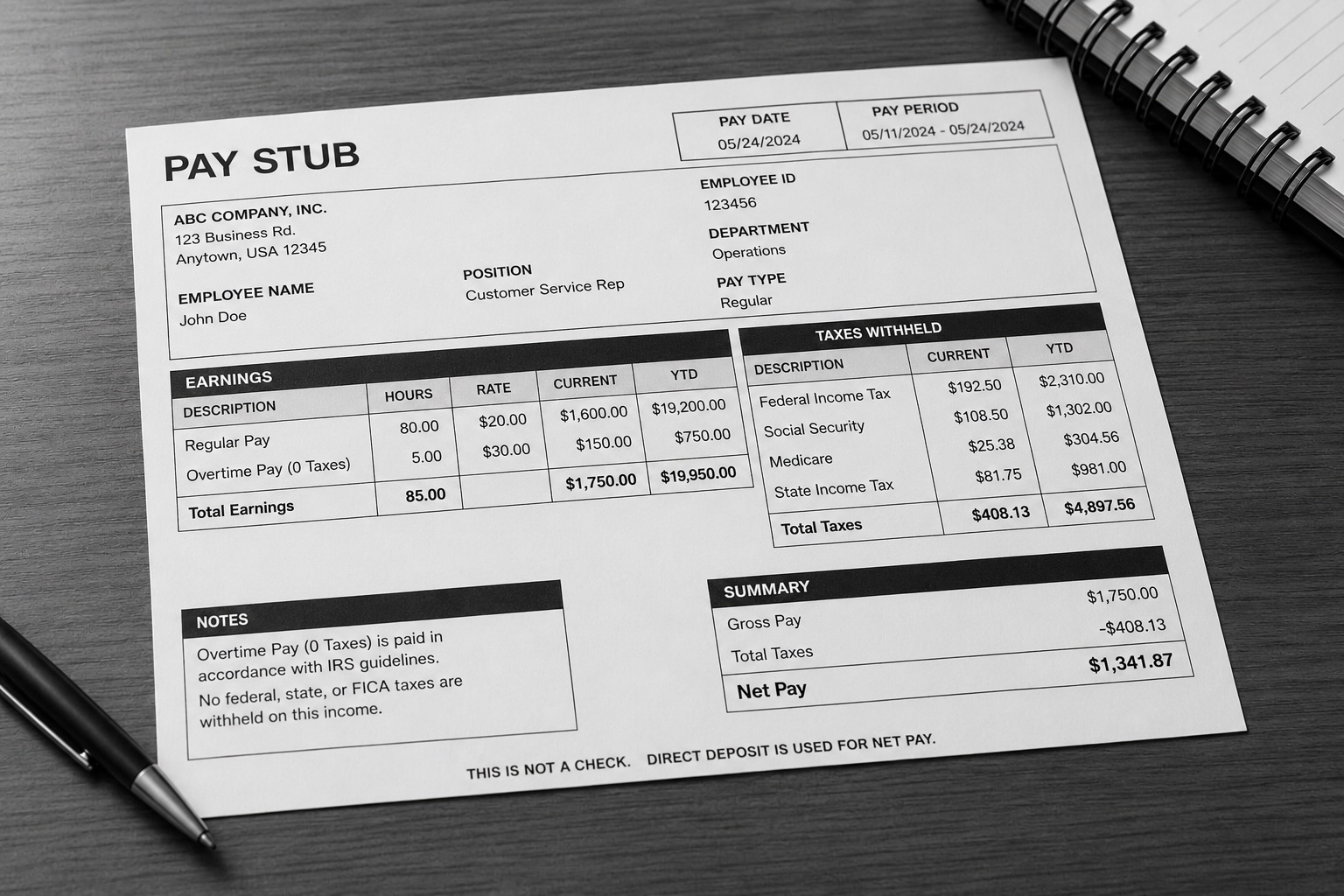
It only applies to the premium (or uplift) portion you receive above your regularly hourly rate. Typically, overtime hourly pay is ‘time-and-a-half’.
This tax break applies to your ‘half’ uplift; meaning, for a working earning $20/hour regular pay and $30/hour overtime, it’s the $10/hr premium is eligible for the overtime tax break.
It Is a Deduction, Not Exemption
The overtime tax treatment is a federal income tax deduction, meaning it is addressed in your federal tax return. It isn’t a blanket exemption of overtime income.
Overtime is still taxable income. It is still subject to federal payroll taxes, like Social Security and Medicare. Depending on where you live, there may also still be state or local taxes.
You get to reduce the taxable income by a qualifying amount when you file your federal tax return.
Tip: Learn how this will be handled on your tax return. From 2026 to 2028, your employer is to list out the qualifying income separately on your W-2, but you’ll need to do some documenting if that’s not the case. For year 2025, I understand it was handled with some manual documentation on tax filers part, given timing of the law.
Tip: From a quick web search, you can take this deduction as a ‘below the line’ deduction, meaning you can claim this deduction even if you are using the standard deduction and not itemizing deductions on your federal tax return. It does not reduce your adjusted gross income (AGI).
It Isn’t Permanent
Under the current legislation, the overtime deduction is currently for tax years from 2025 through 2028.
Tip: Be aware it’s temporary and future government policy may extend or let it expire.
Make use of the current benefit to the extent you are eligible, but don’t count on it as a given in your long term budgeting plans, unless future laws make it permanent.
There Are Income Limits
The deduction starts to phase out if your modified adjusted gross income (MAGI) exceeds $150,000 (for single filers) or $300,000 (for joint filers).
The deduction is reduced by $100 for every $1,000 above those thresholds.
Filers above $275,000 MAGI (single filers) or $550,000 MAGI (joint filers) are not eligible for any part of the deduction.
Tip: Know your MAGI and determine your eligibility before you plan on this deduction.
The Deduction is Capped
Like most tax deductions, it has some constraints.
There is a cap on the amount of qualifying overtime pay that can be deducted from your federal tax return.
For single filers, the deduction is capped at $12,500 per year.
For married filing jointly, the deduction is capped at $25,000 per year.
Tip: Review your projected overtime for the calendar year and estimate how much of your premium will be eligible for this deduction.
Predict How This Applies To You
It’s likely your employer is not changing your paycheck withholding (only separately stating your overtime hours from 2026 onward), so you’ll be eligible for a tax return deduction (and refund) on the premium overtime if you qualify. Confirm with your employer how this is being handled on your paycheck.
Run your numbers and determine if you want to adjust your W-4 withholding so you aren’t giving Uncle Sam a free loan for the year and you get the money in your paycheck regularly. Confirm your figures with your tax accountant so you don’t get caught out and owe taxes, instead.
Tip: Leave your tax withholding values as they are, if you aren’t sure how to calculate this or your overtime hours vary significantly through the year. If that’s you, let the first year help you determine an annual average income and overtime income.
Will You Cap Out?
For my nephew, the cap is aligned with his projected overtime — luckily and coincidentally.
My nephew earns $28/hr regular pay and $42/hr overtime pay. So, the $14/hr premium is eligible for the deduction.
He is typically working 55 hours per week. So, his overtime premium ($14/hr x 15 hours) earnings per week is $210 per week, or $10,920 per year. That’s below the $12,500 cap.
He occasionally works 60 hours per week, so he will be very close to the cap on an annual basis.
Tip: For more experienced, senior workers with higher hourly rate, they will reach this cap faster than my nephew. Determine how this cap affects your annual income and applicable deductions.
Resources
The key is to review your details (with your tax accountant) and understand how it applies to you and the limitations. Here are some places to start:
One, Big, Beautiful Bill provisions
The One, Big, Beautiful Bill Act has a significant effect on your taxes, credits and deductions.
One, Big, Beautiful Bill: How to take advantage of no tax on tips and overtime
Tax Tip 2026-06, Jan. 26, 2026 – The One, Big, Beautiful Bill has a significant effect on federal taxes, credits and…
Questions and answers about the new deduction for qualified overtime compensation
FS-2026-01, January 2026 – This Fact Sheet provides answers to frequently asked questions about the new deduction for…
My Nephew
After meeting with my nephew, I did some research to better understand the ‘no overtime pay tax’ comment.
And, I’m glad I did. I called him to share the above points and he hadn’t heard any of this. He just heard the headline and it turns out that his overtime is close to the annual cap.
Fortunately, there is still time to properly account for this deduction in his budget and understand it’s temporary.
He’s young and starting out; this deduction will help him. He’s exactly the type of person who can benefit tremendously. He’s also the exact type of person who needs to know these details, so he’s not caught out.
What Does This Mean for You?
If you are paid hourly and receive overtime pay, do some homework to determine how this law affects you.
Don’t assume. Speak with a tax specialist. Get the facts.
I hope you’re eligible and have a bit of extra money to support you and your family.
And, if you know someone working overtime who hasn’t looked into this yet, please pass it along.
Enjoy Life and Thanks for Reading,
-Jeff